Jawline
Shape and define the jaw for a stronger outline.
- Treatment time
- Roughly 30–45 minutes
- Results
- Seen straight away; fully settled after 2 weeks
- Longevity
- Usually 12–18 months
- Downtime
- Very little — swelling for a day or two
About Jawline
A well-defined jawline gives the face its frame. Over time the bone underneath shrinks back, the tissue above loosens and the line running from ear to chin loses its edge — and some people naturally have a softer jaw to begin with. Jawline enhancement uses a firm hyaluronic acid filler placed at the angle of the jaw, along its edge, or both, to sharpen and straighten the line.
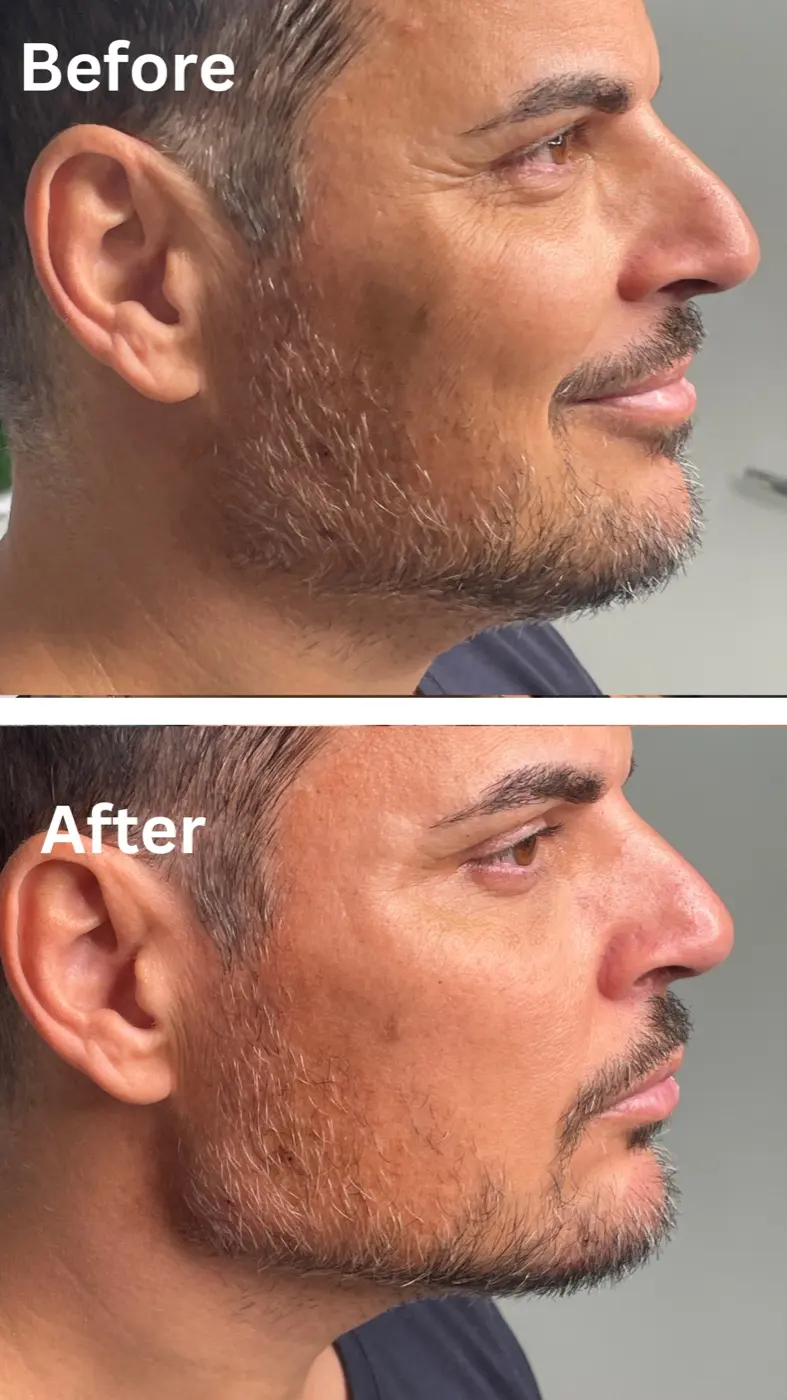
From the front the outline looks cleaner, the profile looks stronger, and early jowling often improves a little too, because the tissue above now has support to rest on.
Before & after
Key Benefits
- 01A crisper, more defined jaw, face-on and side-on
- 02Makes early jowls less noticeable
- 03Can create a more angular or a more refined line, depending on what you want
- 04Evens out differences between the left and right sides
- 05No surgery, and you see the result straight away
- 06Lasts well because the jaw moves very little
Is this treatment right for me?
Jawline filler is for people who want a more defined jaw, who've seen it soften over the years, or who are planning broader facial balancing. If jowls are caused mostly by loose skin, John may recommend PDO threads instead of filler, or together with it.
You may be suitable if…
- Your jaw looks soft, rounded or lacks definition
- You've started to see early jowls or heaviness
- You want your profile to look more structured
- You aren't pregnant or breastfeeding
Your consultation will consider…
- How the area sits within the proportions of your whole face
- The quality of your skin, any loss of volume and how your face moves
- Your health history, allergies, medicines and any filler you've had before
- The likely amount of product, and a realistic plan in stages if one session isn't enough
What to expect
Before treatment
Your first step is an in-person consultation with John. He looks at the area alongside the rest of your face, asks what you'd like to change and what would suit you naturally, and goes through your medical history. Bruising is more likely if you take alcohol, aspirin, ibuprofen or supplements like fish oil or vitamin E, so stop these for the week before where it's safe to. Leave at least two weeks between any dental work and your appointment.
During treatment
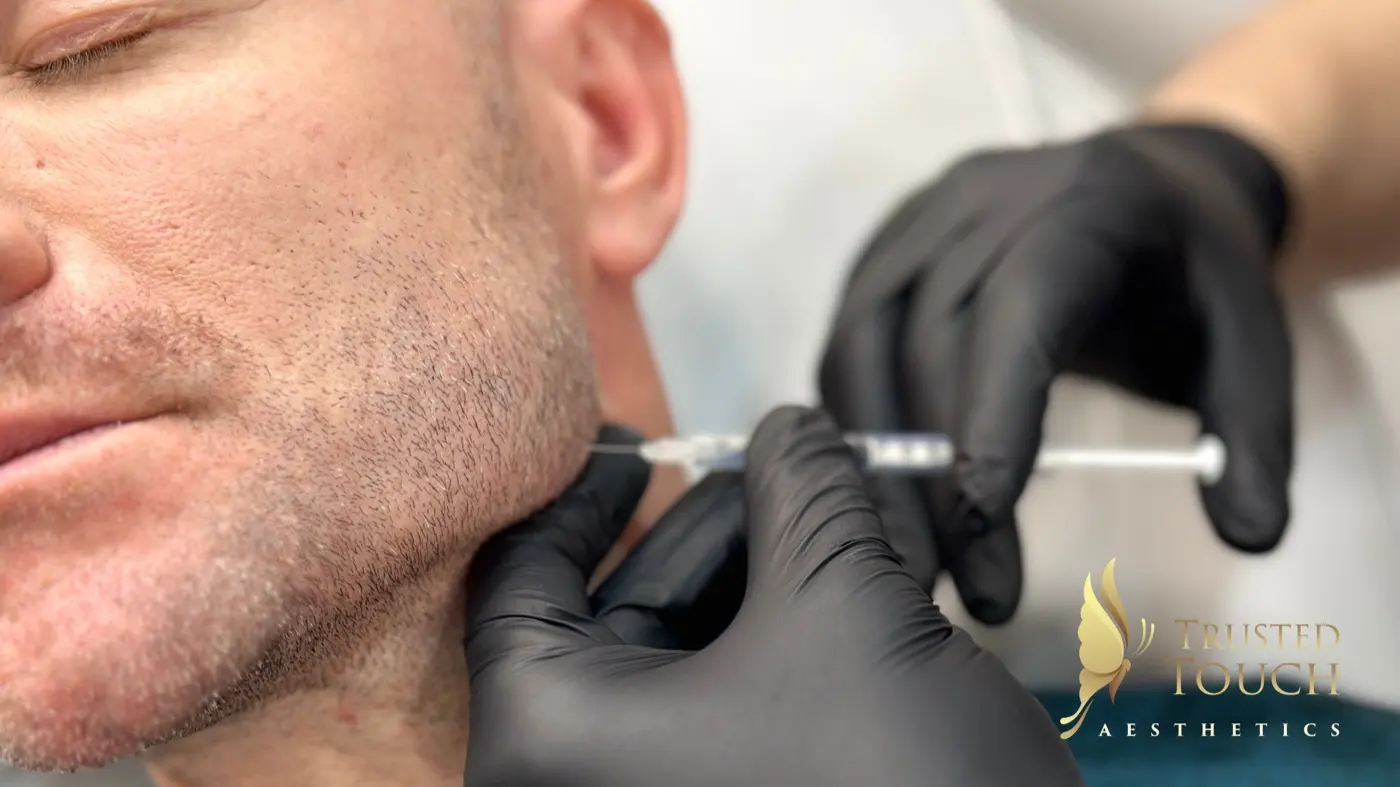
After the skin is cleaned, numbing cream goes on for about 10–15 minutes, and many of today's fillers have a local anaesthetic mixed in too. John then injects the hyaluronic acid gel with either a fine needle or a blunt-ended cannula, whichever suits the area, sculpting and checking both sides match as he works. Expect a sense of pressure and the odd sting, not pain. The appointment usually lasts 30–45 minutes. John normally runs a cannula along the edge of the jaw and adds a few small, deeper placements at the jaw angle.
After treatment
The difference shows immediately, but the area will be slightly swollen, and the final shape takes one to two weeks to settle. John explains your aftercare, and if anything needs fine-tuning you can come back for a review at the two-week mark.
Watch
See this treatment in the clinic, in short videos on John’s aesthetics site, Trusted Touch Aesthetics.
Watch 11 videos →Results & longevity
You'll see more definition immediately, and it sharpens further as swelling fades over two weeks. The firm, structural fillers used on the jaw usually last twelve to eighteen months or longer, depending on the product, how much is used and your metabolism.
Recovery, side effects & aftercare
The jaw may be slightly swollen and sore for a few days, and now and then there's a small bruise where the cannula went in. Most people are back at work the same day.
Side effects
The usual, expected effects are swelling, tenderness, redness and bruising, all of which fade within days. While the gel settles over the first couple of weeks you may feel small lumps or a little unevenness; these generally go on their own, and anything that lingers can be looked at. Less common risks are infection, an allergy-like reaction, or filler ending up somewhere it wasn't intended. On rare occasions filler can affect a blood vessel. John's technique is designed to keep this risk low, he checks for warning signs before you go home, and the clinic keeps the enzyme that dissolves hyaluronic acid on hand so it can be dealt with straight away.
Aftercare
For 24–48 hours, leave the area alone — no touching, pressing or massaging unless John has told you to. For 48 hours, avoid hard exercise, saunas, steam rooms, sunbeds and alcohol, and on the first night sleep with your head a little raised to keep swelling down. If the area is tender, a cool compress (not a frozen one) can help. Hold off facials, dental treatment and any other procedures on the area for two weeks, and don't put make-up over the injection points for the rest of the day.
Get in touch with the clinic immediately if you have pain that is unusual or getting worse, skin that turns patchy, pale or greyish-blue, blisters, redness that is spreading, or any change in your eyesight. You don't need to call about normal swelling and bruising, though you're always welcome to check in.
- Downtime
- Very little — normally a day or two
- Redness
- Slight, gone within hours
- Swelling
- Usual for 24–72 hours
- Bruising
- Can happen; clears within a week
- Normal activities
- The same day; hold off hard exercise for 24–48 hours
Frequently Asked Questions
How much filler does a jawline need?
This varies more than in most areas — often 2–4 ml shared between both sides for a visible difference. John will suggest a sensible amount and can split the treatment into stages.
Can it help with jowls?
It can soften early jowls by rebuilding the support underneath. Where the skin is more noticeably loose, threads or a combined plan may be a better fit.
Is it a good option for men?
Absolutely — a stronger, more angular jaw is among the treatments men ask for most, and John adapts his technique to suit.
Should I have jawline filler or jaw slimming?
Filler adds definition to the jaw. Jaw slimming shrinks a bulky chewing muscle to make a square jaw narrower. They have opposite effects, and your consultation will make clear which matches what you want.
Is it painful?
Numbing cream goes on beforehand and most fillers include a local anaesthetic, so what you feel is pressure and the odd sting, not pain. Expect the area to be a little sore for a day or two.
Can filler be undone?
It can. If needed, hyaluronic acid filler can be broken down with an enzyme — one reason it's the filler we choose — and the clinic always keeps that dissolving treatment in stock.
Will I need to come back for top-ups?
Your body slowly breaks filler down, so most people return for maintenance when the result starts to fade. Clients who come regularly often need less product as time goes on.
Your Practitioner

John Dixon
Founder & Aesthetician
John founded Banana Beauty Lab and runs his aesthetics practice, Trusted Touch Aesthetics, here. He specialises in facial balancing and harmonisation, alongside wrinkle reduction and skin rejuvenation. His training is CPD-certified, he is fully insured, and is known for taking the time to assess your face properly, explaining every option honestly and never over-treating — the aim is always a natural result that still looks like you. Clients regularly mention his calm manner, attention to detail and the aftercare follow-up that checks in on how you're healing.