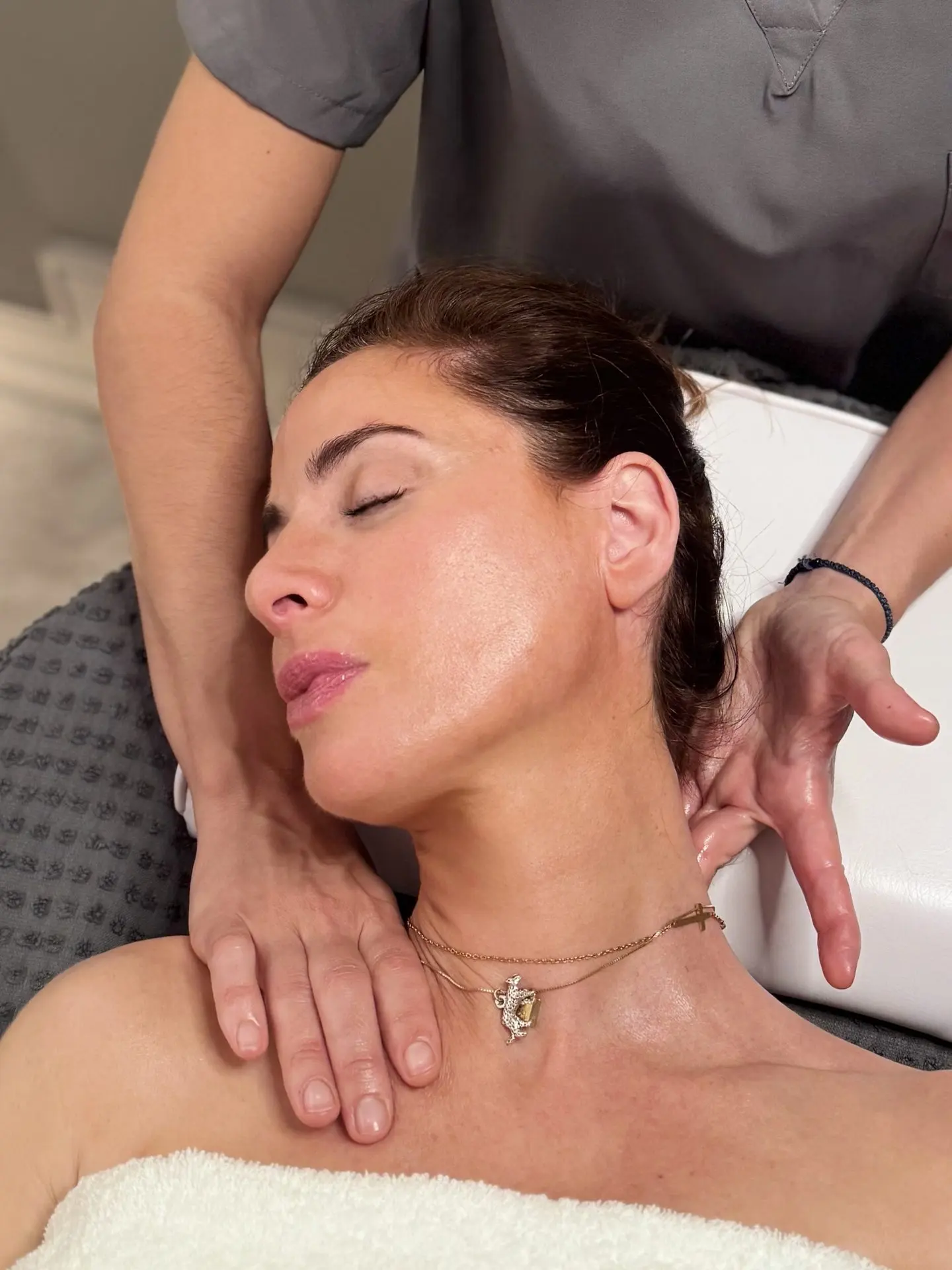
De-Stress
Ease tension, relax your mind and restore balance.
- Treatment time
- 60 minutes
- Results
- Immediate
- Longevity
- Several days to weeks; builds with a course
- Downtime
- None
- Price
- £108
About De-Stress
Our De-Stress massage is designed to melt away stress rather than target one physical problem area — a calming, flowing treatment aimed at improving circulation and leaving you feeling refreshed and recharged. It's the one to book when you're feeling overwhelmed or run down generally rather than sore in a specific place.
Slow, rhythmic full-body strokes and unhurried attention to the head, neck and shoulders settle the nervous system and quieten a busy mind.
Key Benefits
- 01Calms the nervous system and quietens a busy mind
- 02Relieves the physical signs of stress — tight shoulders, shallow breathing
- 03Improves circulation and leaves you refreshed
- 04Supports better sleep
- 05Gentle, flowing pressure
- 06A complete reset in an hour
Is this treatment right for me?
De-Stress suits anyone feeling overwhelmed, tired or wound up, who wants to relax deeply rather than have specific knots worked out. It's suitable for almost everyone, including people new to massage.
You may be suitable if…
- You feel stressed, overwhelmed or run down
- You want to relax rather than be worked on firmly
- You're sleeping badly or can't switch off
- You have no injury, infection or condition that rules out massage
Your consultation will consider…
- What you'd like from the session and any areas of concern
- Injuries, pain, skin conditions and health issues that affect technique
- Pressure preference and any areas to avoid
- Whether a course or package would suit your goal
What to expect
Before treatment
Your therapist will ask briefly about the whole body, any injuries, pain or health conditions, and how firm you'd like the pressure. There's nothing to prepare — arrive a few minutes early so you can settle.
During treatment
A slow, flowing full-body massage with particular attention to the head, neck, shoulders and feet — the areas that respond most to calming touch. Pressure is light to medium and the pace is deliberately unhurried. Sessions are sixty minutes.
After treatment
Take a moment to sit up slowly. Your therapist may suggest simple stretches or ways to ease the tension that brought you in. Drink some water and, if you can, give yourself a little time before rushing back into your day.
Results & longevity
You'll leave calmer and lighter, and the effect on sleep and mood typically lasts several days. When stress is ongoing, a regular session every two to four weeks keeps the benefit going.
Recovery, side effects & aftercare
Massage has no downtime. You may feel relaxed, slightly sleepy or — after firmer work — pleasantly achy for a day, in the same way you might after exercise. That settles quickly.
Side effects
Mild soreness or tenderness for a day or so after firmer work is normal, as is feeling tired or very relaxed. Occasionally people notice a mild headache or feel emotional afterwards, which passes. Bruising is uncommon. Massage is avoided over injuries, infections, recent surgery, blood clots and certain medical conditions — please tell your therapist about anything relevant.
Aftercare
Drink water, avoid alcohol for the rest of the day and keep the treated muscles warm. Gentle movement and stretching help; a hot bath or shower that evening is welcome. If an area feels tender after deep work, a warm compress or a gentle walk helps it settle.
Please get in touch if soreness lasts more than a couple of days, or if you have any concern after your treatment.
- Downtime
- None
- Redness
- Some pinkness where the skin has been worked, fades within an hour
- Swelling
- None
- Bruising
- Uncommon; occasionally after firm or deep work
- Normal activities
- Immediately; take it easy after deep work if you can
Frequently Asked Questions
How is this different from a full body massage?
A full body massage balances relaxation with working out tension. De-Stress is purely about calming — slower, gentler and focused on the areas that settle the nervous system.
Can I ask for firmer pressure?
Of course — your therapist will adapt. If you know you want deep work, deep tissue may be the better booking.
Will I fall asleep?
Very possibly. That's a good sign, and completely fine.
What should I wear?
You'll undress to your comfort level for the area being treated and be covered with towels throughout; only the part being worked on is uncovered.
How often should I have a massage?
For ongoing tension, every two to four weeks is typical. For an occasional reset, whenever you need it. Regular sessions tend to hold results better.
Is there anything that means I shouldn't have a massage?
Fever, infection, recent surgery or injury, blood clots and certain medical conditions can rule out or modify treatment. Please mention anything relevant when you book or at the start of your session.
How do I book?
Online, by phone or WhatsApp. Sessions are available across the week; let us know your preferred therapist if you have one.
Your Practitioners

Leta
Massage Therapist
Leta is a massage therapist at Banana Beauty Lab, delivering the treatments in this section.
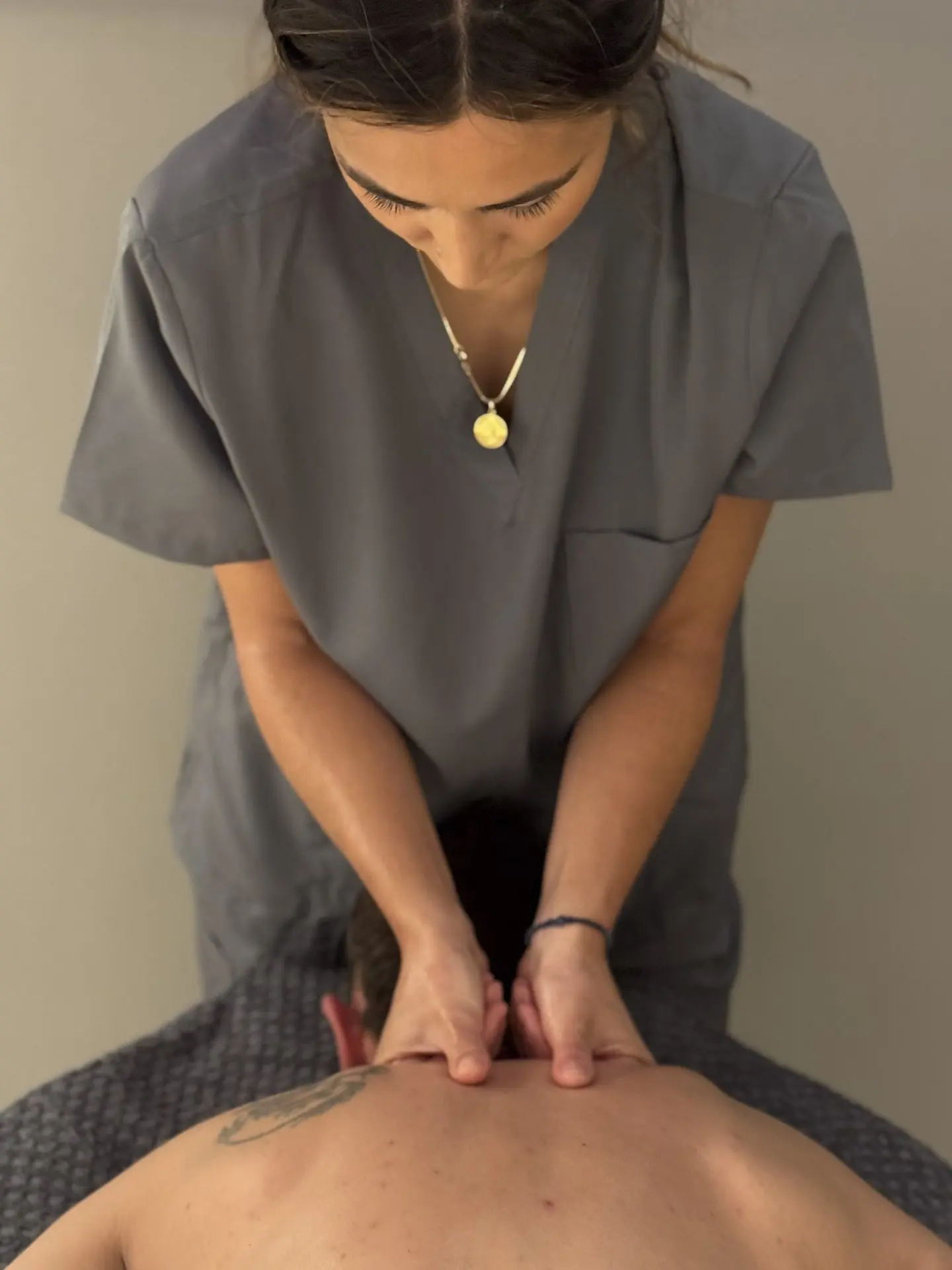
Roberta
Massage Therapist
Roberta is a massage therapist at Banana Beauty Lab, delivering the treatments in this section.