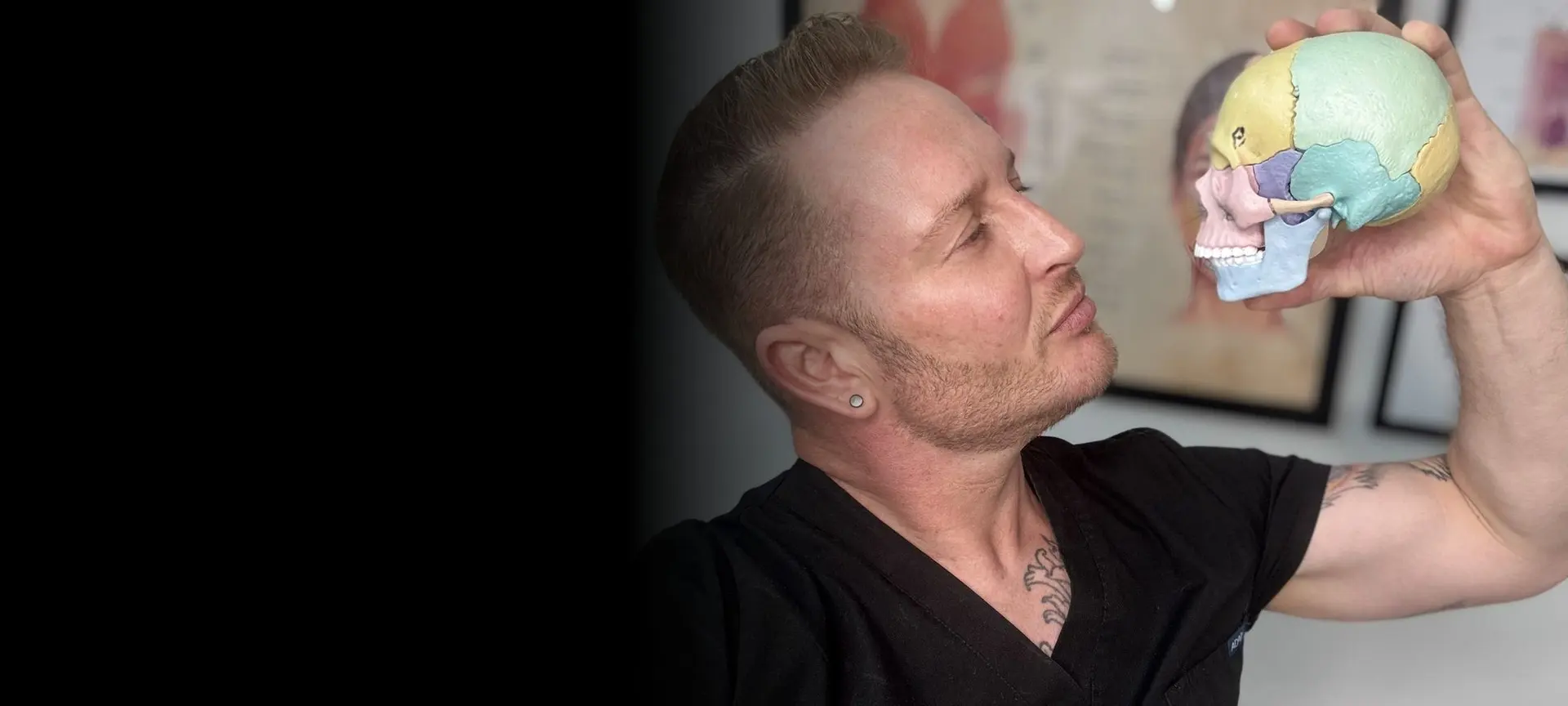
Facial Harmonisation
John Dixon's speciality: one plan for the whole face that brings your features into balance and proportion, for a natural, refreshed result that still looks like you.
What is facial harmonisation?
Facial harmonisation looks at how your features work as a group. Rather than treating a single area, John considers your whole face: how the upper, middle and lower thirds balance, the line running through the cheeks, chin and jaw, how the lips relate to the nose and chin, and how everything looks from the side.
That assessment becomes a plan that makes small, careful changes to several areas. The aim is a face that looks rested, defined and well proportioned, not one that looks as though it has had work done.
Facial balancing and harmonisation is what John specialises in, and it’s why most of his clients now choose him. He approaches every face this way, whether you’ve come for one area or a full plan.
Most faces aren’t symmetrical
Your own asymmetry is very hard to spot. You see yourself in the mirror every day, so a slightly flatter cheek, a lower brow or a jaw that sits differently on one side just looks normal to you. In photos, though, it’s often what makes a face look tired or a little off.
Balancing doesn’t always mean treating both sides the same. Sometimes just one side needs support, with a combination of dermal filler and anti-wrinkle injections to match it to the other. Sometimes the fix lies elsewhere, for example bringing the chin forward a little so the profile, jaw and lips fall into proportion.
What John considers
- How the left and right sides compare
- The chin and your profile
- Bone structure and loss of volume
- How strong your muscles are and how they move
- Balance between the upper, middle and lower thirds
- How the lips, nose and chin work together
Why harmony matters
People see your face as one
We take in a face in one glance rather than feature by feature. Lips, cheeks, chin and jaw are all seen in relation to each other, so changing one area can leave another looking out of step. Harmonisation plans them as a group.
Natural-looking, still you
The goal is for you to look like yourself on a good day: rested, defined and in proportion. A few small, carefully placed changes across several areas usually look more natural than a lot of product in one place.
Often less product in total
Building up the right foundations, such as the cheeks, chin or temples, can lift and soften other areas without treating them directly. Dealing with the cause instead of each separate sign often means using less filler, not more.
It follows the way faces age
As we age, the face loses volume and support in a familiar order: temples, cheeks, then jawline. A whole-face plan restores what has changed instead of chasing individual lines.
How it works
- 1
Consultation and facial assessment
John studies your face from the front and from the side: the balance between the upper, middle and lower thirds, how the two sides compare, the chin and jaw in profile, and how your face moves. You tell him what bothers you and what you'd like to keep.
- 2
Your photo and breakdown
John photographs your face and marks the suggested areas on the photo, then gives you a full breakdown of the plan and its price. You take both home and decide when you're ready.
- 3
Treatment
Every area gets the treatment best suited to it: dermal filler for structure and volume, anti-wrinkle injections to soften movement, and skin boosters, threads or collagen stimulators where the skin itself needs support.
- 4
Review
About two weeks later a review looks at the whole result and makes any small adjustments needed.
Areas a plan may include
Your consultation
A thorough consultation, never rushed
John examines your face and explains everything in detail: what he can see, why it matters, and what would really make a difference, as well as what wouldn't.
Your photo, marked up
John photographs your face and marks the suggested treatment areas on it, so you can see exactly what he recommends and where.
A complete breakdown to take home
You leave with the plan, the areas, the amounts and the price, so you can think it all through before you decide anything at all.
No pressure, and no obligation to book on the day.
Packages, not piecemeal
As harmonisation covers several areas in one plan, John prices it as a package, and your breakdown shows exactly what’s included.
See all pricesDermal filler packages
- 1ml£190
- 2ml£290
- 3ml£390
- 4ml£490
- 5ml£590
- 6ml£690
- 7ml£790
Lips, chin, jaw, cheek, nasolabial lines only. Anti-wrinkle injections and other treatments in your plan are included in your breakdown.
Results
Genuine clients, full face, before and after
Results vary from person to person. Every treatment starts with a consultation.
Watch
John talks clients through their harmonisation plans in short films on his aesthetics site, Trusted Touch Aesthetics.
Watch 21 videos →Questions
What is facial harmonisation?
It’s an approach that plans treatment around your whole face instead of a single feature. John assesses your facial proportions and treats a mix of areas, often combining dermal filler with other treatments, so the result looks balanced and natural.
Is my face asymmetric?
Nearly everyone's face is, and it's very hard to spot in yourself. Using your own photo, John will show you where the two sides differ and whether treatment is worthwhile. Sometimes only one side needs balancing, using a combination of dermal filler and anti-wrinkle injections.
What do I get from the consultation?
A thorough assessment and explanation, a photo of your face with the suggested areas marked, and a complete breakdown of the plan and price to take home. You don't have to book anything on the day.
Is it the same as facial balancing?
Yes. Facial harmonisation and facial balancing are two names for the same approach: treating the face as a whole and adjusting several areas so they work together.
Will I look different?
You should look like a fresher version of yourself. Every plan is based on your own features, and changes are made step by step so you decide how far to go.
How many appointments will I need?
It depends on your plan. Some people need one appointment; others prefer a few sessions spaced over several weeks. John will explain the order and timing at your consultation.
How long do results last?
That depends on which treatments are used, and on you. Dermal fillers usually last about 6 to 18 months depending on the area, and anti-wrinkle injections about 3 to 4 months. Your plan will tell you what to expect from each part.
Does it hurt?
Most fillers already contain a local anaesthetic, and numbing cream can be used as well, so most people find treatment very comfortable. A few days of swelling, tenderness or bruising is common.
How much does it cost?
Most harmonisation plans are priced as a package by the millilitre, with dermal filler packages from £190 for 1ml up to £790 for 7ml. Your consultation breakdown shows the whole cost before you decide anything.
Start with a consultation
Each plan starts with John assessing you in person. You’ll go away with a clear plan and price, and you’re under no obligation to go ahead.