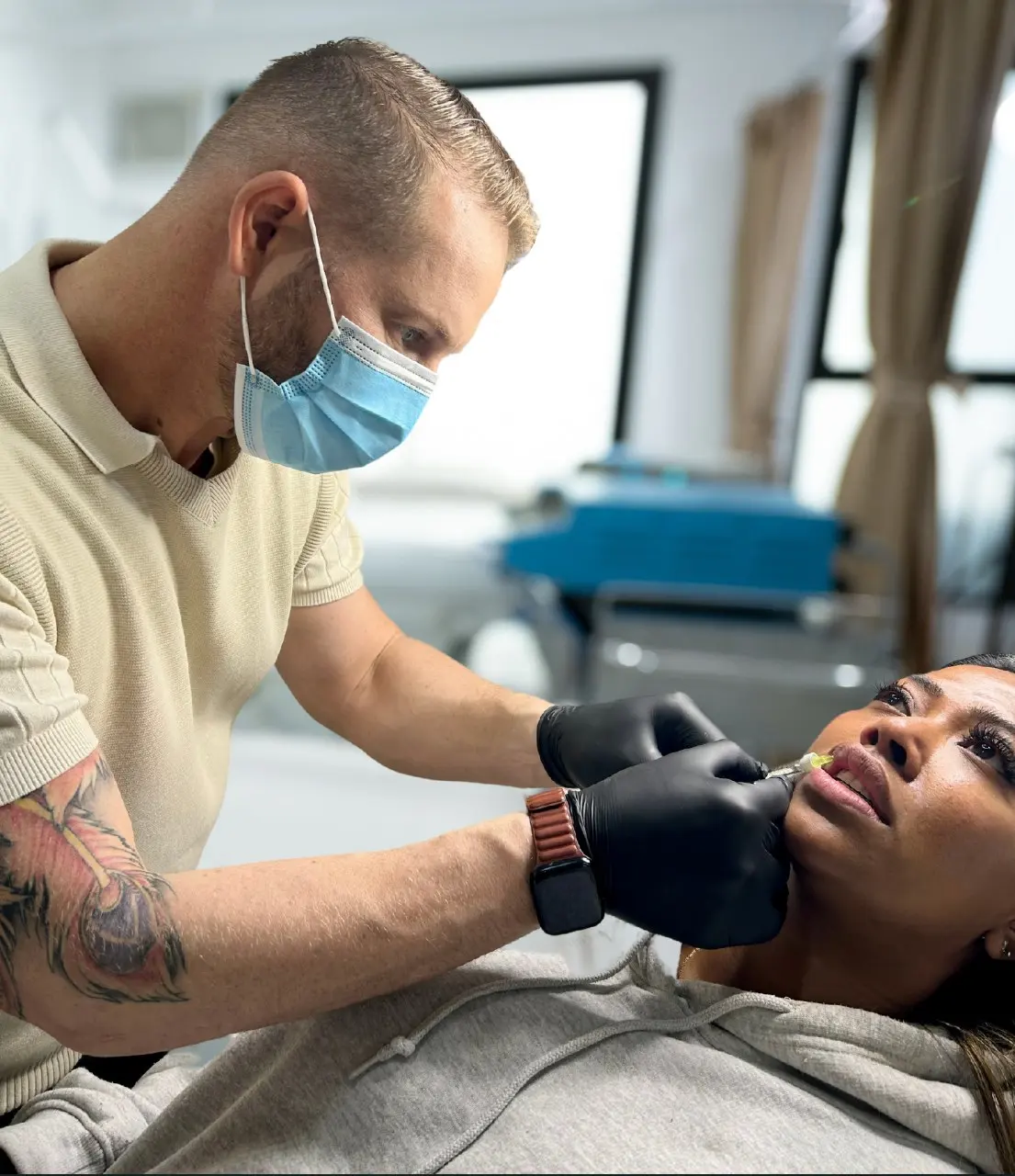
TCA Skin Peel
A resurfacing peel for sun damage, patchy tone and dull or rough skin.
- Treatment time
- Around 30–45 minutes
- Results
- Fresher skin once peeling settles, in about a week
- Longevity
- Months; maintained with SPF and good skin care
- Downtime
- Around a week of peeling
- Price
- £120
About TCA Skin Peel
A TCA peel uses trichloroacetic acid to lift away damaged outer layers of skin in a carefully controlled way. Over the next few days the treated skin sheds, revealing fresher, smoother and more even skin underneath, and the healing process encourages new collagen.
TCA comes in different strengths, from a gentle refresh to a deeper peel for sun damage, pigmentation, fine lines and shallow acne scars. At your consultation John chooses the strength and how many layers to apply, based on your skin and what you want to treat.
Key Benefits
- 01Smoother, more even texture
- 02Fades sun damage, dark spots and patchy pigmentation
- 03Softens fine lines and shallow acne scars
- 04Brighter, fresher skin once the peeling is over
- 05Strength chosen for your skin and concern
- 06Can be repeated as a course to build results
Is this treatment right for me?
A TCA peel is a good fit if you have sun damage, uneven tone, dull skin, fine lines or shallow acne scars and can set aside about a week for visible peeling. It isn't usually done during pregnancy or breastfeeding, on broken, infected or inflamed skin, or shortly after isotretinoin. Darker skin tones need extra care because of the risk of pigment changes, and John assesses this at your consultation.
You may be suitable if…
- You have sun damage, dark spots or an uneven skin tone
- Your skin looks dull or rough, or fine lines are appearing
- You have shallow acne scars
- You can allow about a week for your skin to peel and settle
Your consultation will consider…
- Your skin type and tone, and whether you're prone to pigmentation or keloid scars
- Cold sores, active acne, eczema or broken skin in the area
- Pregnancy, breastfeeding, recent isotretinoin use or recent time in the sun
- The strength of peel, and whether one peel or a course is right for you
What to expect
Before treatment
John reviews your skin and history and confirms your plan. In the week before, stop retinol, acids and other active skincare on the area, and avoid the sun, sunbeds, waxing and hair removal. You may be asked to prepare your skin with particular products first. If possible, arrive without make-up.
During treatment
Your skin is cleansed and degreased, and delicate spots such as the corners of the eyes, nose and mouth are protected. John paints on the TCA solution in even layers and keeps a close eye on how your skin reacts. For a few minutes you'll feel heat and stinging, which cool air helps to ease. Your skin is then cooled and finished with a soothing cream and SPF. The appointment lasts around 30–45 minutes.
After treatment
For the first day or two your skin looks red and feels tight, like sunburn. It then darkens and dries, and usually begins to peel from about day three. Peeling normally finishes within a week or so, leaving fresh pink skin that needs careful protection from the sun.
Watch
See this treatment in the clinic, in short videos on John’s aesthetics site, Trusted Touch Aesthetics.
Watch 5 videos →Results & longevity
When the peeling is over, your skin looks brighter and feels smoother. Tone, pigmentation and fine lines keep improving over the next four to six weeks as new collagen forms. Some people only need one peel. For sun damage or scars, John may recommend a course, with at least four to six weeks between peels. Results last for months if you keep up good skincare and daily sun protection, because fresh sun exposure can bring pigmentation back.
Recovery, side effects & aftercare
Allow about a week for visible recovery. Your skin is red and tight for a day or two, then darkens, dries and peels from about day three. Most people feel fine going out once the peeling has finished, usually within a week.
Side effects
Redness, tightness, stinging, darkening and peeling are all expected and fade as the skin renews. Less often, a peel can lead to redness that lasts longer, patches of darker or lighter skin (more likely with darker skin tones or after time in the sun), a cold sore flare, infection or, rarely, scarring. That's why careful aftercare and sun protection are so important.
Aftercare
Use a mild, gentle cleanser and nothing harsh or abrasive for at least 48 hours. Keep your skin moisturised with a fragrance-free cream made for sensitive skin. Don't pick or pull at peeling skin; let it come away naturally so it doesn't scar. Leave make-up off for 24–48 hours and avoid retinoids, AHAs and BHAs for at least a week. Wear a broad-spectrum SPF 30 or above every day and keep sun exposure to a minimum for several weeks.
Get in touch with the clinic if redness lasts or gets worse, or if you have pain, swelling, blisters, weeping or crusting, any signs of infection, or patches of skin that look darker or lighter after healing.
- Downtime
- Around a week of redness and peeling
- Redness
- Red for 1–2 days, then pink while the new skin settles
- Swelling
- Mild, first 1–2 days
- Bruising
- None expected
- Normal activities
- Light activity straight away; no exercise, saunas or swimming until peeling has finished
Frequently Asked Questions
What does TCA mean?
TCA is short for trichloroacetic acid. This chemical peel removes damaged outer layers of skin in a controlled way so that fresher, more even skin takes their place.
Is it painful?
While the solution is on, you'll feel heat and stinging for a few minutes. This eases once your skin is cooled. Afterwards it feels tight and warm, like sunburn.
How long does the peeling last?
It usually begins around day three and finishes within about a week. Try not to pick; let the skin shed by itself.
How many peels will I need?
Some people need just one. For sun damage, pigmentation or scars, John may recommend a course, with at least four to six weeks between peels.
Can I have a peel if I have darker skin?
Darker skin tones have a higher risk of pigment changes after a peel. John assesses your skin at consultation and will only suggest a peel, and a strength, that's right for you.
When can I go back to wearing make-up?
Not for the first 24–48 hours, and ideally not until you've stopped peeling.
Can I have a peel in the summer?
Yes, but you must be strict with sun protection, because freshly peeled skin is very sensitive to UV. Many people choose autumn or winter instead.
How does it compare with microneedling?
Microneedling uses fine needles to build collagen, with a day or two of redness. A TCA peel resurfaces the skin with acid, with about a week of peeling, and is a popular choice for pigmentation and sun damage.
Your Practitioner

John Dixon
Founder & Aesthetician
John founded Banana Beauty Lab and runs his aesthetics practice, Trusted Touch Aesthetics, here. He specialises in facial balancing and harmonisation, alongside wrinkle reduction and skin rejuvenation. His training is CPD-certified, he is fully insured, and is known for taking the time to assess your face properly, explaining every option honestly and never over-treating — the aim is always a natural result that still looks like you. Clients regularly mention his calm manner, attention to detail and the aftercare follow-up that checks in on how you're healing.