Coming soon
Shockwave Therapy
Non-invasive acoustic wave treatment for stubborn tendon pain.
- Treatment time
- Around 20–30 minutes
- Results
- Builds over the weeks after a course
- Downtime
- None
About Shockwave Therapy
Shockwave therapy (extracorporeal shockwave therapy, or ESWT) uses an applicator held against the skin to deliver short pulses of acoustic energy into a painful tendon or soft tissue. It is used for some long-standing tendon and soft-tissue problems that haven't settled with rest and exercise, such as plantar fasciitis (heel pain), Achilles and patellar tendon pain, tennis and golfer's elbow, and calcific shoulder tendinopathy.
Romulo uses shockwave as one part of a wider plan, usually alongside exercise rehabilitation, rather than as a stand-alone fix. He trained in shockwave therapy in 2018 and has used it in his own clinics since.
Key Benefits
- 01A non-invasive option for stubborn tendon pain
- 02No injections, no anaesthetic and no recovery time
- 03Short sessions, usually a few minutes of treatment
- 04Used alongside exercise for the best chance of lasting improvement
- 05Assessed first, so it's only used where it's appropriate
Is this treatment right for me?
Shockwave suits people with a tendon or soft-tissue problem that has lasted several weeks or months and hasn't improved with the usual first steps. It isn't the right first treatment for a new injury.
You may be suitable if…
- You've had heel, Achilles, knee, elbow or shoulder tendon pain for some time
- Rest, exercise or other treatment hasn't helped enough
- You're not pregnant
- You don't have a bleeding disorder or take blood-thinning medication (unless agreed with your doctor)
Your consultation will consider…
- Whether your symptoms fit a condition shockwave is used for
- Pregnancy, bleeding disorders and blood-thinning medication
- Cancer, infection or open wounds in the treatment area
- A pacemaker or other implanted device, and any recent steroid injection
What to expect
Before treatment
Your first appointment is a full physiotherapy assessment with Romulo. He'll ask about your symptoms, how and when they started, your medical history, your work and activities, and what you'd like to get back to doing. Bring any scans, letters or reports you have. Wear comfortable clothing that lets him see and move the area being treated.
During treatment
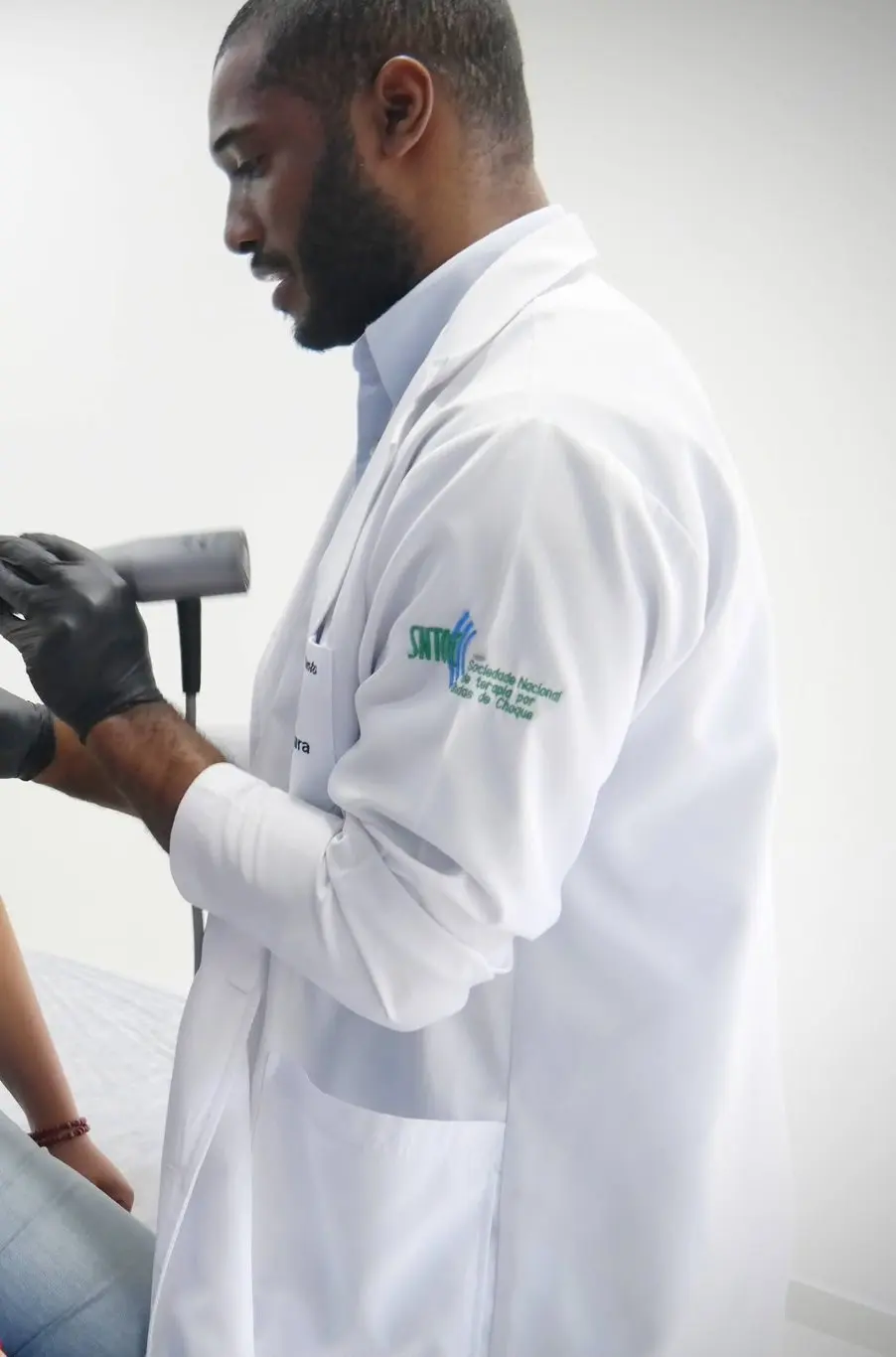
Romulo applies gel to the skin and moves the applicator over the painful area. You'll feel a strong tapping sensation that can be uncomfortable over the most sensitive spot; the intensity is adjusted to what you can tolerate. The shockwave part of the session usually takes only a few minutes.
After treatment
You can walk out and carry on with your day. Romulo will usually ask you to avoid high-impact exercise on the area for a day or two and to keep up your rehabilitation exercises.
Results & longevity
Shockwave is usually given as a short course, commonly a session a week for several weeks. Any improvement tends to build gradually over the weeks after the course rather than immediately. Results vary from person to person, and it doesn't help everyone; Romulo will review your progress as you go and tell you honestly if it isn't working.
Recovery, side effects & aftercare
There's no downtime. The area may feel sore, tender or slightly red for a day or two after a session.
Side effects
Temporary soreness, redness, tingling or mild bruising over the treated area are the most common effects and settle within a few days. Rarely, the skin can be irritated or symptoms can briefly flare.
Aftercare
Keep up the exercises and advice Romulo gives you; they matter as much as the treatment in clinic. Stay gently active rather than resting completely, unless he has told you otherwise, and note how your symptoms respond so you can discuss it at your next session.
Please contact the clinic if your pain becomes much worse after treatment, or if you have any concern. Seek urgent medical help (NHS 111, or 999 in an emergency) for new numbness around the groin or buttocks, new problems controlling your bladder or bowels, weakness in the legs, or chest pain.
- Downtime
- None for most people
- Redness
- Occasionally mild redness over the treated area, settling within hours
- Swelling
- Not expected
- Bruising
- Uncommon
- Normal activities
- Usually straight away; Romulo will tell you if anything should be avoided for a day or two
Frequently Asked Questions
Does it hurt?
It can be uncomfortable over the most painful spot, but the intensity is adjusted to you and the treatment itself takes only a few minutes.
How many sessions will I need?
Commonly a course of several weekly sessions. Romulo will recommend a number after your assessment and review it as you go.
What conditions is it used for?
Mainly long-standing tendon and soft-tissue problems such as plantar fasciitis, Achilles and patellar tendinopathy, tennis and golfer's elbow, and calcific shoulder tendinopathy.
Who shouldn't have shockwave?
It isn't used in pregnancy, over areas of cancer or infection, or for people with bleeding disorders or on blood thinners without medical advice. Romulo checks this at your consultation.
Do I need a GP referral?
No. You can book directly. If Romulo finds anything that needs a doctor's attention or a scan, he will tell you and explain the next step.
Can I claim on private medical insurance?
Some insurers cover treatment by an HCPC registered physiotherapist. Please check with your insurer before booking, as policies differ.
Your Practitioner

Romulo Costa
HCPC Registered Physiotherapist
Romulo is an HCPC registered physiotherapist with more than a decade's experience, from intensive care and rehabilitation to musculoskeletal medicine and long-standing pain. He trained in Brazil, where he ran his own rehabilitation clinic, before moving to Scotland and running his own clinic in Motherwell specialising in chronic pain and spinal problems. He starts by listening: to understand not just where it hurts, but what the pain has stopped you doing and why it hasn't settled. Every plan is built on a thorough assessment and explained clearly, with shockwave, laser and hands-on treatment used only where they have a clear purpose.